Is the Next Big Opportunity Distracting You From the Business You've Already Built?
An ARC Business Development client coaching recap on focus, accountability and the hidden cost of chasing something new.
By Andrew Redding | ARC Business Development
Running a business isn't easy. And sometimes the hardest part isn't knowing what to do next.
It's having the discipline to do what you already know needs doing.
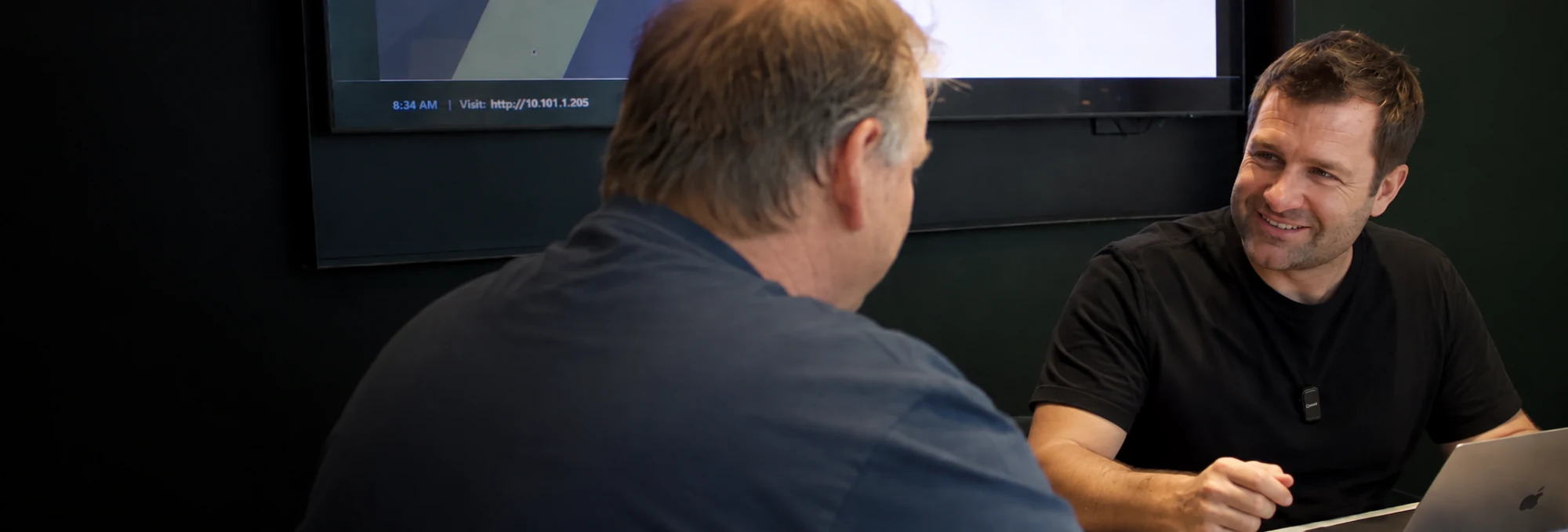
I recently had a coaching call with two business owners who have spent years building a successful operation. They've grown their business, developed a team, invested in equipment and put systems and processes in place.
From the outside, they've achieved plenty.
But behind the scenes, they were frustrated.
They weren't making the money they believed the business was capable of making. Their team wasn't consistently following processes. They were spending too much time dealing with the same problems, and the pressure was starting to affect their motivation, communication and working relationship.
And while all this was happening, they were exploring new business opportunities.
A potential acquisition. A property investment. A partnership. Even a new product line.
Each opportunity had potential.
But there was one question I kept coming back to.
What if the biggest opportunity isn't the next business you start, but the business you've already got?
The danger of chasing the next opportunity
As business owners, we're naturally drawn to opportunities.
We see potential everywhere.
Another business comes up for sale. Someone approaches us about a partnership. We identify a product we could sell. We see a way to expand.
And our minds immediately start working.
What could we make? How big could it become? What if we get in early?
There's nothing wrong with ambition. It's one of the reasons many of us went into business in the first place.
But there's a difference between pursuing an opportunity strategically and using a new opportunity to escape the frustrations of your current business.
During our call, we discussed a potential acquisition.
There were plenty of questions about the opportunity: the property, the existing business, the people, the partnership arrangements and how it could operate.
But I challenged the owners to go back to the beginning.
Why do you actually want to do this?
Does it move you closer to your five-year personal goals?
Will it create more value than concentrating on your existing business?
And most importantly, do you have the time, money and management capacity to take on something else?
Sometimes we get so caught up in working out how to do something that we forget to ask whether we should be doing it at all.
Your existing business might be leaving money on the table
One of the biggest issues we discussed was workshop efficiency.
The business had systems. It had processes. It had expectations around recording time, completing jobs and maintaining standards.
But those processes weren't being followed consistently.
Jobs weren't always being recorded correctly. Paperwork was being missed. Time was being lost. The same conversations were happening repeatedly.
And every one of those problems had a financial consequence.
Think about it.
If you're paying someone for a full day's work but only recording and charging a portion of that time, what's happening to the rest?
Your wages still need to be paid.
Your overheads haven't changed.
But the revenue that should be covering those costs isn't coming in.
Now multiply that across several employees, five days a week, over an entire year.
The opportunity can be significant.
Yet instead of fixing those gaps, it's tempting to look for growth somewhere else.
More people. More equipment. More space. Another business.
Before you invest in more capacity, make sure you're getting the most out of the capacity you've already got.
Sometimes improving what you already have will deliver a better return than adding something new.
If you've had the same conversation for three months, something needs to change
Another major frustration was team accountability.
One of the owners felt like they were constantly reminding staff about the same things.
Finish the paperwork.
Record your time.
Clean up after the job.
Follow the process.
Complete the work properly.
The team would improve for a while, then old habits would return.
And the frustration would start again.
Here's the question I asked.
If you've been having the same conversation for three months and nothing has changed, why would having that same conversation for another three months produce a different result?
At some point, we have to stop repeating ourselves and start examining why the behaviour isn't changing.
Is the expectation clear?
Have people been trained properly?
Is the process practical?
Does someone own the outcome?
Are we measuring performance?
And what happens when the standard isn't met?
Accountability isn't about constantly getting angry with your team.
It's about creating clear expectations, supporting people to meet them and consistently following through.
If your systems only work when you're standing over someone, you haven't finished building the system.
Knowing what to do isn't the same as doing it
This was probably the biggest lesson from the entire conversation.
The owners weren't short of knowledge.
They understood the importance of recording time correctly.
They knew they needed better accountability.
They understood the value of clear roles and responsibilities.
They knew the business needed consistent performance before taking on more commitments.
We'd already discussed many of these things.
The challenge wasn't discovering another solution.
It was consistently implementing the solutions they already had.
And this is something I see regularly in business coaching.
Business owners spend time learning, planning, researching and looking for better ways of doing things.
But when it comes to changing their daily habits, they struggle.
Because change is uncomfortable.
It means having conversations you've been avoiding.
It means holding yourself accountable.
It means doing the less exciting work instead of chasing the next interesting idea.
It means staying focused when you'd rather be doing something else.
Knowing what to do doesn't change your business. Taking action does.
And doing it once isn't enough.
The real improvement comes when those actions become consistent habits.
Sometimes your biggest obstacle is what's happening in your head
There was another important part of this conversation.
One of the owners felt they should be further ahead.
They'd spent years building the business and had made mistakes along the way.
Looking back, they could see decisions they wished they'd made differently.
And that frustration was affecting their motivation.
I understand that feeling.
I've made plenty of mistakes in business myself.
I've chased opportunities, changed direction and taken longer routes to achieve things than I probably needed to.
But here's what I've learnt.
You can't change the decisions you made five years ago.
You can't go back and recover every opportunity you missed.
And you can't build a better business by constantly comparing yourself with someone else.
What you can do is take everything you've learnt and use it to make better decisions today.
If you know where you've gone wrong, that's valuable.
But only if you do something with that knowledge.
You can't change the last five years of your business. But you can decide what the next five years look like.
Stop measuring yourself against where you think you should be.
Start measuring yourself against the actions you're taking to get where you want to go.
Build a business that gives you options
Towards the end of the call, we talked about something I believe every business owner should consider.
What do you actually want your business to give you?
More money?
More time?
Less stress?
The ability to step away?
Something you can eventually sell?
Because here's the interesting thing.
The work required to create those outcomes is often very similar.
You need a profitable business.
You need reliable systems and processes.
You need people who understand their responsibilities.
You need accurate numbers.
And you need a business that can operate without depending on you for every decision.
When you build that kind of business, you create options.
You might choose to keep growing.
You might employ someone to take over your role.
You might reduce your working hours.
Or you might decide to sell.
But if the business relies entirely on you to keep everything moving, those options become much harder.
A great business shouldn't just make you money. It should give you choices.
The challenge I left them with
My recommendation was simple.
For now, stop chasing the next opportunity.
Put the new ideas aside.
Get clear on the numbers the existing business needs to achieve.
Make sure the team is following the processes.
Improve efficiency.
Clarify who's responsible for what.
Build consistent performance.
And prove that the business can achieve its targets before committing more money and energy to expansion.
Not forever.
Just until the fundamentals are working properly.
Because once the business is performing consistently, the owners can revisit those opportunities from a much stronger position.
With better cash flow.
More time.
Less pressure.
And a clearer understanding of what they actually want.
What can you take away from this?
If you're feeling frustrated with your business, I want you to ask yourself five questions.
- Am I chasing new opportunities because they're genuinely right for me, or because I'm frustrated with my current business?
- What money could my business be leaving on the table through poor efficiency, incomplete processes or a lack of accountability?
- What problems have I been talking about for months without actually changing anything?
- What do I already know I should be doing, but haven't committed to consistently?
- If I spent the next 12 months improving the business I already have, what could it look like?
You might find that the answers are simpler than you expect.
That doesn't mean the work will be easy.
But you may not need another business, another opportunity or another complicated strategy.
You may just need to finish building the business you've already started.
And sometimes, that's the biggest opportunity of all.
Ready to build a better business?
At ARC Business Development, we help business owners step out of the day-to-day frustrations and focus on what really matters, improving their thinking, strengthening their business fundamentals and taking consistent action.
Because building a better business isn't just about making more money.
It's about creating more profit, more time and more control.
Better Thinking. Better Business. Better Life.